
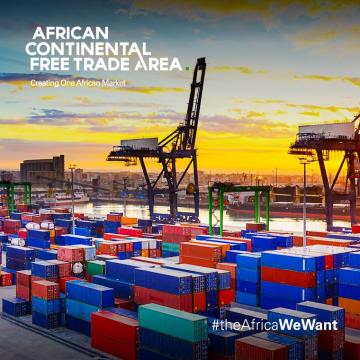
The AfCFTA refers to a free trade area that encompasses the 55 African Countries. It was brokered by the African Union, and acts as a historical land mark that brings together all the African union member states to trade among themselves. It is to create a single market deepening the economic integration of the continent thus enhancing intra-African trade “particularly trade in value-added production and trade across all sectors of Africa’s economy”) by eliminating 90% tariffs on goods, and reducing other non-tariff barriers that have been hindering intra-African trade. It was created by the trade agreement signed during the remarkable summit of the assembly of the African Union heads of state, receiving 44 signatories of the 55 African Union member states in Kigali, Rwanda on 21st March, 2018 and trade was to commence as of 1st January 2021 making it the largest free trade area in the world in terms of participating member countries, with combined GDP of $3.4 trillion and a total population of about 1.3 billion people. With its implementation, a report from the world bank group estimates that 30 million people will be lifted out of extreme poverty while other 68 million from moderate poverty and by 2035, income will be boosted by $450 billion, a 7% gain. Other objectives include establishing liberalized market through multiple rounds of negotiation, aiding the movement of capital and people, facilitating investment. Achieving a sustainable and inclusive socioeconomic development, gender equality, and structural transformation within member states which serves as agenda 2063 of the African Union.
Why Africa needs the AfCFTA
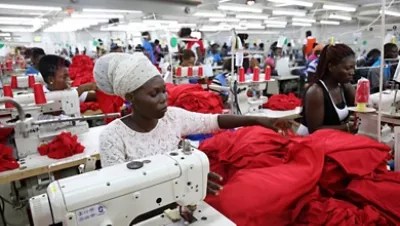
Creation of job opportunities for the African youth and alleviating poverty in the continent. This is one of the most significant benefits that the youth can realize from the implementation of the free trade area. This is because it comes with liberalization of the African Economy especially the service sector with emphasis on business services, communication, financial services, transport, and tourism. Meaning the African labour force will be able to to seek jobs in any African country, move freely, and render services or establish a venture in any member country of the AfCFTA. Liberalization of the financial services comes as good initiative for the African entrepreneurs, innovators, and the enterprising women of Africa who have not been able to [fully] put their ideas into action due to financial constraints. The liberalization of the financial services will ease access to financial resources and increase the creation of entrepreneurial ventures. According to reports, wages would rise by 11.2% for women and 9.8% for men by 2035 impressive enough for the governments in the continent to devote efforts and resources for its success. In regards to goods, the sectors that will benefit majorly from liberalizing the African economy include agro-processing, pharmaceuticals, automotive, textiles, chemical and mineral beneficiation. These are areas that have the potential to employ a large pool of labour and also generate enough revenues to transform the African economies into self reliance.
Boosting intra-African trade. When it comes to trading with itself, Africa is the lowest in the world and this has really affected Africa’s rate of economic growth and development over the decades though it has some of the fastest growing economies in the world. According to statistics from the United nations conference on trade and development, intra-continental Export in 2017 equaled to 16.6% in Africa, 68.1% in Europe, 59.4% in Asia and 55% in America. Africa is not leveraging the advantage of the large internal market but focusing on the external trade where it has minimal advantage to reap satisfactory economic benefits. However, the AfCFTA is here to turn the tables. There are so many SMEs in the continent that have the potential to expand and drive innovations and growth if a conducive economic ecosystem is put in place, fortunately the AfCFTA promises more than that. In the words of David Luke ( African trade policy center), our trade has been directed primarily outside the continent from the 15th century because Africa was merely inserted into the global trade. The development agenda has been to promote this kind of trade. For instance roads and railway networks were established to connect areas of raw materials to sea ports for export to the developed countries instead of enhancing trade between African countries. But all that will change because the development strategies with AfCFTA in place will take into consideration establishing efficient transport network that promote intra-African trade that will bring smiles to the faces of all Africans.
Improvement in continental food security. The AfCFTA will create avenues for the development of the agricultural sector and ease transportation of food to areas of scarcity especially the sub-saharan regions that are facing the effects of climate change. One way the AfCFTA will achieve this food security is through promotion of agricultural development with emphasis on agribusiness value chain and focusing on food, fish, cocoa and beans, beverages, vegetable oils and fats, processed meat, grains etc. The African development bank has committed large sum of capital to support wheat production in the continent following the food crisis arising from the Ukrainian war.
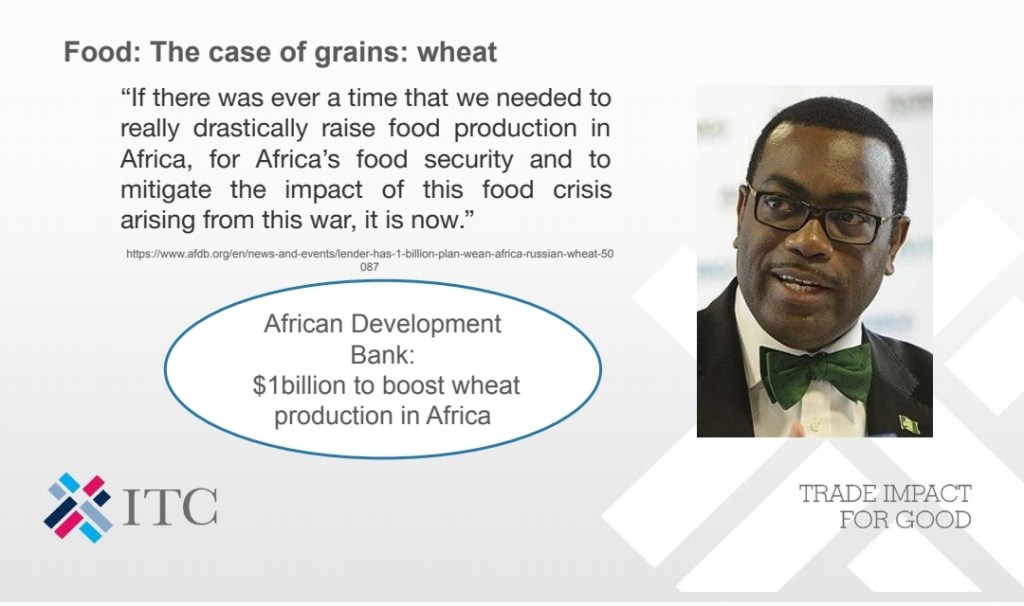
A number of African countries largely depended on wheat imports from either Ukrain or Russia for their food, and production of other consumables. They include Somalia, Benin, Sudan, Egypt, Dr Congo, Senegal, Tanzania, among others. However, Russia’s invasion of Ukraine hit these countries hard due to disruption of the supply chain. The AfCFTA will ensure that these countries don’t have to go overseas for their wheat but obtain from within, and develop Africa.
Besides investment in Agriculture, the AfCFTA will facilitate the development of infrastructure through the development of better road and railway networks that give a connection for African countries to Areas of food.
Other than creating jobs and alleviating poverty, improving food security, boosting intra-African trade, other benefits of the AfCFTA include but not limited to increasing the competitiveness of Africa’s industrial products, enhancing the participation of the continent in global trade, and stimulating economic growth in the continent.


Leave a Reply